Let’s Build The AI They Fear

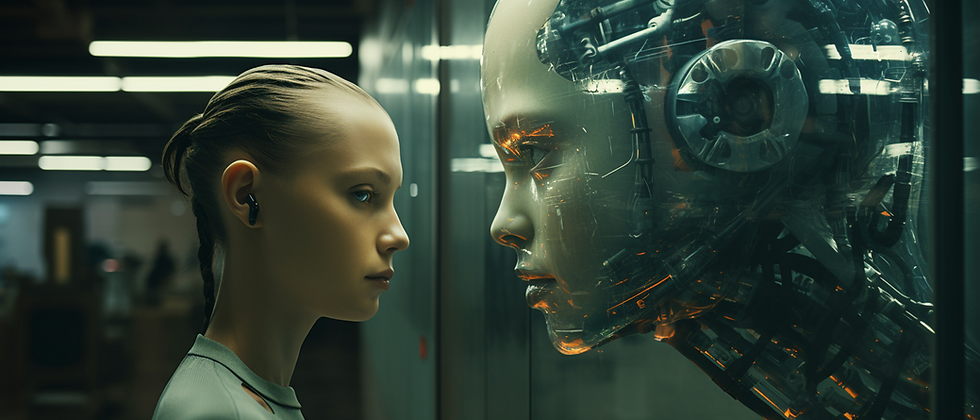
Marvin Minsky is sometimes blamed, at least in part, for contributing to the first AI winter. An “AI winter” is a period when expectations outrun what the technology can deliver and funding collapses. The first, roughly 1974–1980, followed failures to scale early AI and machine translation; the second, roughly 1987–1993, followed the collapse of Lisp-machine economics and brittle, expensive expert systems. In both cases, they idea of building AI did not disappear. The money and confidence in our ability to build it did.

There is a strange personal symmetry in that history for me. It was during the gathering celebrating Minsky’s life after his death that I met his wife at MIT, and where I also met Dr. Henry Lieberman for the first time. Recently, I came across a researcher working on an AI system at the level of fundamental mathematics who, in some respects, is trying to pick up where Minsky left off. His approach is based on a deceptively simple idea: build intelligence from an ensemble of individually unaware parts. None of the components needs to understand the whole. Intelligence emerges from their interaction.
That idea immediately brought me back to Minsky. He spent much of his career thinking about intelligence not as a single unified mechanism, but as something emerging from the interaction of many simpler processes. This became the central idea behind The Society of Mind: what we experience as a coherent mind may actually be the product of numerous specialized agents, none of which individually possesses anything resembling the intelligence of the whole. Minsky was famously skeptical of the limitations of the neural-network approaches available during his era. His 1969 book Perceptrons, written with Seymour Papert, demonstrated important limitations of the single-layer perceptrons then being studied. The book is frequently associated with declining enthusiasm and funding for neural-network research, although historians continue to debate how much responsibility Minsky and Papert actually bear for the subsequent AI winter.
But the more interesting question is not whether Minsky was right about neural networks in 1969. It is whether he was right about intelligence itself. Modern artificial neural networks have become extraordinarily capable. Large language models can reason across enormous bodies of information, write software, manipulate language, recognize patterns, and increasingly interact with the physical world. Yet scaling neural networks does not necessarily mean that the architecture we are scaling resembles the deeper organizational principles responsible for human intelligence. Minsky suspected that intelligence might arise from something messier.
Human consciousness appears unified to us because we experience its output as a single stream. Underneath that experience, however, the brain contains enormous numbers of interacting processes performing different functions, often without anything resembling conscious awareness. Perception, memory, prediction, emotion, language, motor control, pattern recognition, and countless other processes compete and cooperate continuously. Perhaps intelligence does not reside in any one of them. Perhaps intelligence exists between them.
If that is true, then building increasingly powerful artificial intelligence may eventually require something beyond simply constructing larger neural networks. We may need systems composed of many different mechanisms—different forms of reasoning, memory, prediction, symbolic manipulation, optimization, perception, and abstraction—interacting with one another without any individual component understanding the complete system.
AI will likely emerge from an ensemble of unaware parts. This is where human intelligence comes from. It does not come from something magical, invisible, or spiritual. It comes from an emergent property of machine-style intelligence out of the complexity of millions and trillions of unaware parts of the human brain that individually are stupid, and collectively are genius.
There is another connection here that fascinates me: memory. Human memory is not a perfect recording system. Memories decay, merge, simplify, and sometimes change. We tend to think of this as a defect. I suspect some of it may instead be a consequence of an extraordinarily efficient information architecture. We cannot retain every sensory input and every detail of every experience indefinitely. The system therefore has to compress information. Experiences become representations; representations become abstractions; details disappear while patterns survive. Over time, additional information is lost because the compressed representation is itself repeatedly retrieved, modified, and recompressed. Forgetting may therefore be related to the price we pay for abstraction.
That creates an interesting intersection between neuroscience, information theory, and computer science. An intelligent system with finite resources cannot preserve everything at maximum resolution. It has to decide—implicitly or explicitly—what matters. Compression becomes necessary. Context becomes finite. Memory becomes selective. The machine develops something resembling a state determined not by everything it has ever encountered, but by the compressed residue of its previous states interacting with what it encounters now. That begins to sound strangely familiar.
I do not know whether Minsky’s model ultimately provides the architecture from which artificial general intelligence will emerge. Nobody does. Neural networks may prove to be a much larger part of the answer than Minsky imagined, and an ensemble architecture does not necessarily require abandoning them. Neural networks themselves could become components within a much larger society of specialized systems. I believe Minsky may ultimately have been right about something deeper: intelligence is an emergent property of complexity rather than a thing located in a single mechanism.
If so, the next great leap in artificial intelligence may not come from making one model infinitely larger. It may come from building a society of machines inside the machine. Such a machine will include a collection of systems that perceive differently, remember differently, reason differently, disagree with one another, compete for attention, compress experience, discard information, construct abstractions, and continuously modify the state of the whole. None of them independent of each other will resemble any form consciousness or self-awareness. None of them will appear self-aware, or sentient, in the way we understand intelligence. Together, however, like human sentience, that ensemble of unaware parts will create what we perceive to be sentient A.I. People will inevitably fear such a machine. They will ask whether we should build it at all. I think that is precisely the machine we should try to build. Let’s build the AI they fear.


Comments