The Art of Thinking: Constructing Better Models of Reality

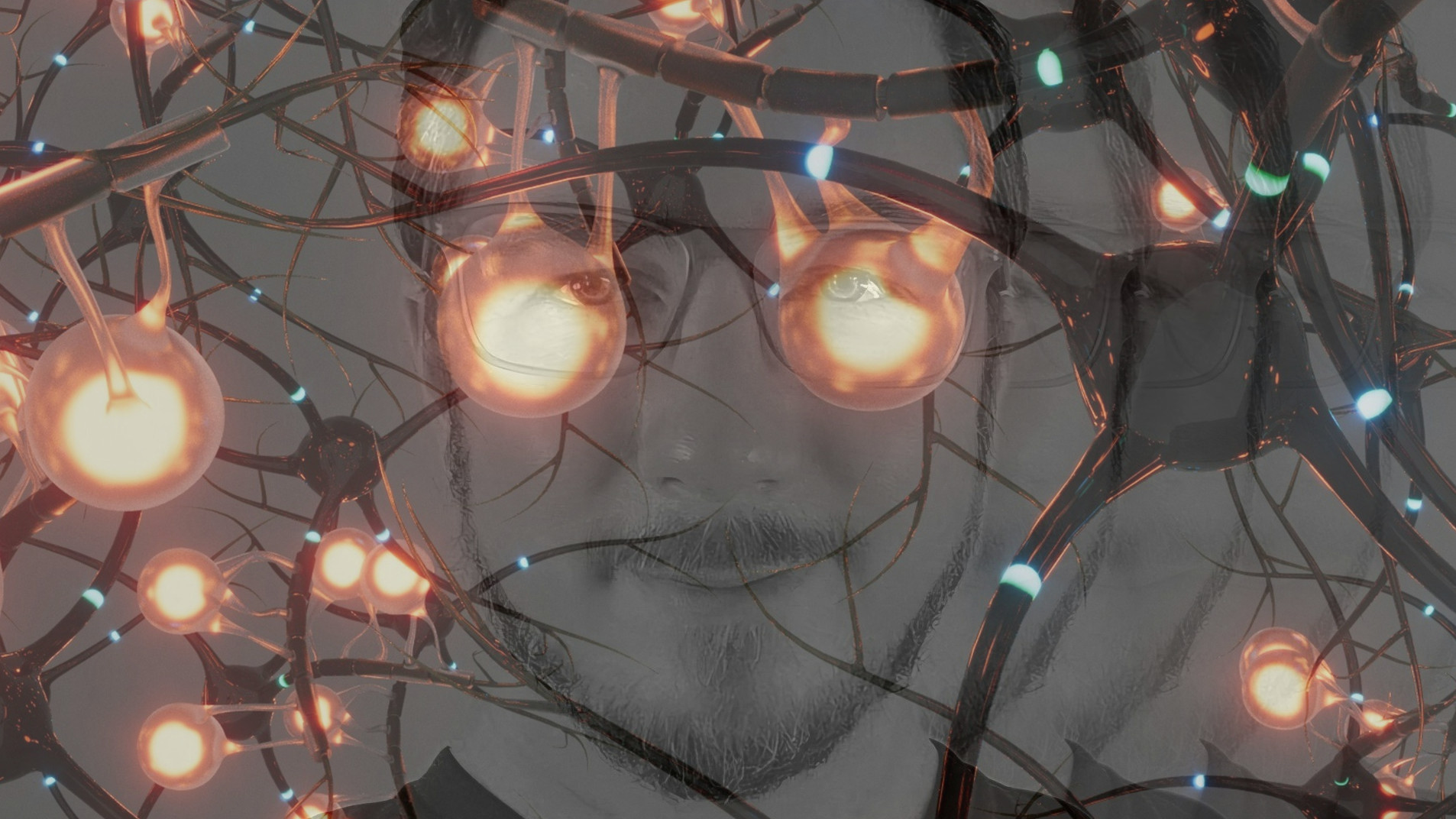
"The skill is knowing which variables belong together, which must stay independent, and whether a link between them is supported by reality or created by our own emotional needs, loyalties, fears, and identities."
The Distance Between Mind and Reality
In 2001, I was a soldier in the 2nd Infantry Division at Camp Casey, South Korea, taking a sociology class through the University of Maryland University College. Within weeks, the professor, Dr. Jon Huer, and I were having regular dinners. This turned into a habit that lasted more than 10 years long after I got out of the Army, returning to Korea in graduate school and making time to meet Jon when my schedule allowed. We argued constantly on the limits of human agency, of which he believed we have none at all. The nuance I came to learn is that human agency is limited to our awareness of ourselves and the identity we cling to, and several other factors that can be worked on through greater self-awareness of the lower levels of our subconscious needs.
Those arguments with Jon gave me my first look at an idea I have been working on ever since those cold winter dinners in Korea in 2001. That is, we rarely think about reality and our mind’s construction of it directly, and only about our models of it.
Physical reality exists independently of our interpretation of it, but none of us experiences it in its entirety. We experience fragments and build mental models from them, biased by our need for in-group rewards and the identities we cling to in order to receive them; these models serve as representations that determine what we notice, dismiss, anticipate, and believe is possible.The quality and precision of our thinking and ability to model reality where the rubber meets the road depends on the distance between those models and the reality they represent.
The art of thinking is, for me, the lifelong work of becoming aware of the lower levels of the mind and reducing that distance. I can choose to think of myself as a veteran, entrepreneur, patriot, international traveler, human, defender of the Free World, intellect, economics and geopolitics academic, break dancer, comedian, and whatever tool in my tool box of identities that create the image of myself to me, which in turn impacts how I am received and what in-group rewards and resources I can access. See some of my earlier work on this topic here: “Human Identity Formation & Narrative Formation”, By Kevin Kane, “A Mechanical Model Explaining Universal Human Commonalty & Priorities Variance”, By Kevin Kane,“The 4 Stages of Human Sentience: What If We Are Not There Yet?”, By Kevin Kane, and “People Are Not One Person: Multi-Dimensionality & Who We Are”, By Kevin Kane.
Consider our model of other people. Over a lifetime we may know 100—perhaps 1,000—people well. Out of eight billion, that is a tiny sample, and not a random one: birds of a feather flock together. None of us has met humanity; we have met a narrow, heavily selected slice of it. We are not passive observers of humanity; how we behave shapes how others respond, so the observer is altering the environment from which the observer draws conclusions. Our nervous systems trigger responses in other people before we speak to them. Without self-awareness, we can mistake “this is how people respond to me” for “this is how people are.” The model then becomes self-reinforcing: we act on its assumptions, provoke the responses it predicts, and take those responses as proof. A false model grows more convincing with every confirmation it helped create.
Compression: The Engine and Vulnerability of Thought
No mind can process reality at full resolution, so human intelligence runs on compression. A word contains a concept, a concept contains a literature, and several concepts together form a model that represents more than any unaided nervous system could hold at once. Compression is what makes sophisticated thought possible. See my earlier writings on this topic: “Image Resolution Intelligence Capacity”, By Kevin Kane
It is also where the formation of idealized intelligence fails. Compression is lossy: every abstraction discards information, and every model risks drifting from the reality it was built from. Models let us think beyond instinct and perception, but they become prisons when we forget they are representations rather than the world itself.
Walter Lippmann’s Public Opinion contains one of the important early formulations of this problem: how people build simplified pictures of a world too large to observe, then act on the pictures. Governments and publics, he showed, made consequential decisions based on delayed, distorted, or even fictitious accounts of events. Earlier this month I heard the Director of DARPA use the phrase “mental model” and wondered whether its lineage ran back to Lippmann—a phrase itself is a compression of a century of thought.
This is why I read the thinkers of the 1800s and 1900s. Meeting an idea near its source, before generations of interpretation compress it into a term or shorthand, reveals the assumptions and discarded alternatives the compressed version hides. The goal is not to abolish compression—that would abolish thought—but to know when it has removed something that now matters, and to be able to move back down the layers of abstraction when the model stops matching reality.
When the Model Meets Hard Problems
Hiring on pedigree is a clear example. Pedigree compresses many variables into one convenient proxy and spares us the labor of evaluating a person. But it omits what matters most at the frontier: judgment now rather than years ago, creativity without a team’s support, leadership without institutional cover, discipline, courage, and performance under extreme uncertainty. Pedigree may correlate with these across a population; it cannot establish them in an individual.
That gap matters most when the work is genuinely hard. Frontier problems are, by definition, ones where established methods are incomplete. Sometimes conviction must survive years in which nearly everyone disagrees—including people who stand to lose money, status, or power from the change. Their resistance is not necessarily irrational; inside their incentives, it often makes sense. But the crowd’s approval cannot be the instrument by which we determine what is true.
Some people who climb institutional hierarchies brilliantly cannot operate without the institution’s protection. Success with institutional cover and success without it draw on overlapping but different strengths, and someone surrounded by similarly selected peers may never learn how much of their apparent capability is borrowed from the institution. A person who doesn’t fit our model of who should solve a problem may have exactly the experience and independence needed to see what the model excludes.
How to Know When You’re Wrong
Everything above carries a risk, and it is the same risk this essay began with. A model in which the crowd resists because of its incentives, while the independent thinker sees further, can explain away every disagreement. Once it does, it has become self-sealing—the very feedback loop that turns a false model into a convincing one. Many lone convictions held for years against consensus were simply wrong; we just don’t write essays about them.
Independence of thought is valuable only when paired with a discipline for detecting error. Before holding a position against the crowd, I try to answer three questions in advance:
What would I expect to observe if I were wrong—and by when?
Who disagrees with me without a stake in the outcome, and what do they see?
Is my conviction tied to the evidence, or to an identity I would lose by changing my mind?
The third is the hardest. Independence can become its own in-group, with its own reward: the satisfaction of being the one who sees. Greatness is not contrarianism for its own sake, nor is consensus evidence of error. The goal is not to stand against the crowd; it is to be indifferent to whether we stand with it or against it, and to let reality settle the question.
Propaganda and “The Matrix, Actually”
Public Opinion sits near the intellectual origins of modern propaganda, alongside Edward Bernays’ Propaganda. Bernays became one of the most influential early practitioners of public relations, including campaigns that helped normalize smoking among women by tying cigarettes to independence and status. What followed across advertising and propaganda showed that influence works best not through argument but through self-image, identity, aspiration, and belonging. The vulnerability is not merely that propaganda exists; it is that propaganda operates through our needs for identity, belonging, status, and social acceptance.
People may compress this whole idea into a meme: “The Matrix, Actually.” But reality is not a construct, and it is not subjective. Physical reality is singular and imposes the same constraints on everyone. What differs is our capacity to lie to ourselves with models that don’t hold up under pressure.
Those insulated from that pressure can live inside a false model for decades. Think of the person telling tall tales at the bar who lashes out at anyone who questions them. When sustaining a self-deception matters more than testing it, protecting the model replaces examining it—and in organizations, attacks on the person asking a question begin to substitute for answering it. A model that survives only because questioning it is costly has not survived a test against reality; it has survived a test of power.
Escaping requires returning to the source ingredients. Lost information can’t be recovered from a meme-sized compression; it has to be rebuilt from dense primary material and integrated with enough self-awareness to see which parts of our own models exist to protect us from the truth.
Endurance and Boundaries
Building complex models—and holding enough of their variables in mind to reason through them—takes real cognitive effort. It means resisting the first explanation that is socially comfortable, cheap, or emotionally satisfying. Avoiding that labor becomes dangerous when the inherited model no longer fits the world. The way to build capacity is to study hard things, not only entertaining ones, with sustained concentration, until we can hold more interacting variables without collapsing them into something simpler.
Intellectual capacity, knowledge, and our idealized version of what a smart person is capable of alone isn’t enough. Precision also requires keeping boundaries between models inside our mind: to prevent contamination of models. Emotion, identity, and loyalty generated in one model can leak into another: a political identity contaminates an economic model; affection for a person contaminates our read on their competence; institutional loyalty contaminates our assessment of the institution; fear of losing money contaminates our judgment about whether a technological transition is real. The skill is knowing which variables belong together, which must stay independent, and whether a link between them is supported by reality or created by our own emotional needs, loyalties, fears, and identities. See my previous writing on contamination in intelligence: “The Trajectory of Intelligence: Decoupling Emotion & Intelligence Contamination”, By Kevin Kane
The aim resembles a quantitative trader’s: not the most complicated model possible, but one whose representation of the variables that matter predicts better than the alternatives. Extra resolution helps only when it corresponds to information that matters.
And the forces that distort us are not only foreign. The cognitive war comes from China and Russia, but also from within, where belonging, status, and access to resources shape what people are willing to believe and repeat—often while they remain sincerely convinced their motives are principled. The mind is capable of lying to itself below conscious awareness.
Scarcity: Where Reality Collects the Bill
Scarcity is one of the clearest tests of a model, because physical constraints don’t negotiate rhetorically. Abundance subsidizes bad models; surplus absorbs the cost of error. When energy, industrial capacity, labor, or capital tighten, the distance between model and reality becomes expensive to ignore. The theory of induced innovation, associated with J.R. Hicks, holds that rising input costs push innovation toward economizing on those inputs. We are in such a period now, and it is a chance to rebuild our models, not only our technologies. Innovation doesn’t arrive on our models’ timetable—adaptation can take twenty years or a hundred—which is reason to focus on the real work of expanding what we can produce rather than the war of ideas propaganda would happily keep us fighting.
Intellectual Sovereignty
Intellectual sovereignty is the ability to stay independent enough from belonging, status, and reward to update our model when reality demands it—including when that separates us from people whose acceptance would make life easier. It does not mean needing to disagree. It means not needing to agree.
The war is not only over what information enters the mind. It is over how our mental models determine what happens once it arrives: whether we accept it, reject it, compress it, distort it, tie it to identity, or prevent it from changing what we already believe.The path to improving that is being aware that thinking is not from air; it is from models that we can start to examine in ourselves and then begin correcting.
Propaganda exploits the nature of this lack of awareness of our own mental model formation, groups reward it, insecurity defends it, and abstraction can hide its errors for years. But eventually physical reality arrives. Cognitive security begins with protecting our capacity to rebuild our models when they fail—because the war is not only of the world, but of the one modeling it in our mind. On the other side of this model improvement at scale is less war between nations. See my final thought on this:
“World Peace & The Human Sentience Limiting Factor”, By Kevin Kane.


Comments